




Winning at What Cost?: The Psychology of Gamification and The Fight for Our Focus

featured_nick-fancher-JR3OJCp_lk4-unsplash

In an era where smartphones and ceaseless digital interaction dominate our lives, our daily experiences have been subtly transformed into a game. Simple acts such as sharing a photo, completing a task, or maintaining a conversation now often come with points, badges, or streaks — rewards that subtly push our behaviour. This phenomenon is known as gamification. Gamification involves applying game concepts in non-game contexts to motivate and encourage users to perform certain actions or steps. Although a “like” or a “streak” may seem insignificant, they are precisely designed to capture our attention, change how we understand and engage with ourselves and others, and often keep us glued to our screens. Since technology companies use human attention as a resource to generate revenue, gamification plays an essential role in their business strategies. It turns digital engagement into competitions and rewards, using psychological stimuli to encourage users to become overly attached to the platform. But how does all this affect us, and what can we do to regain meaningful human relationships?

Simple acts of sharing a photo, completing a task, or maintaining a conversation now often come with points, badges, or streaks — rewards given to us that subtly push our behaviours.

THE MECHANICS OF GAMIFICATION

Gamification uses features like points, levels, rewards, leaderboards, and feedback loops derived from games and applies them to online activities. For example, TikTok flash trends and seasonal effects prompt users to join quickly to stay relevant; Instagram shows how popular someone is by counting likes; and Duolingo encourages users to practise every day with badges and an experience (XP) system.


These features influence users through the well-known psychological concept of operant conditioning, first introduced by BF Skinner. When we receive a reward (such as a like, badge, or congratulatory message), dopamine — the ‘feel good’ hormone — is released by our brain, which encourages us to repeat the behaviour.1 In time, we might find ourselves seeking rewards, mainly to feel validated and happy. This compulsion creates a loop: the behaviour leads to a reward, which motivates the individual to repeat the same behaviour.

This uncertainty — Will I get likes? Did someone respond? — creates psychological tension that we constantly try to resolve by checking our devices repeatedly.


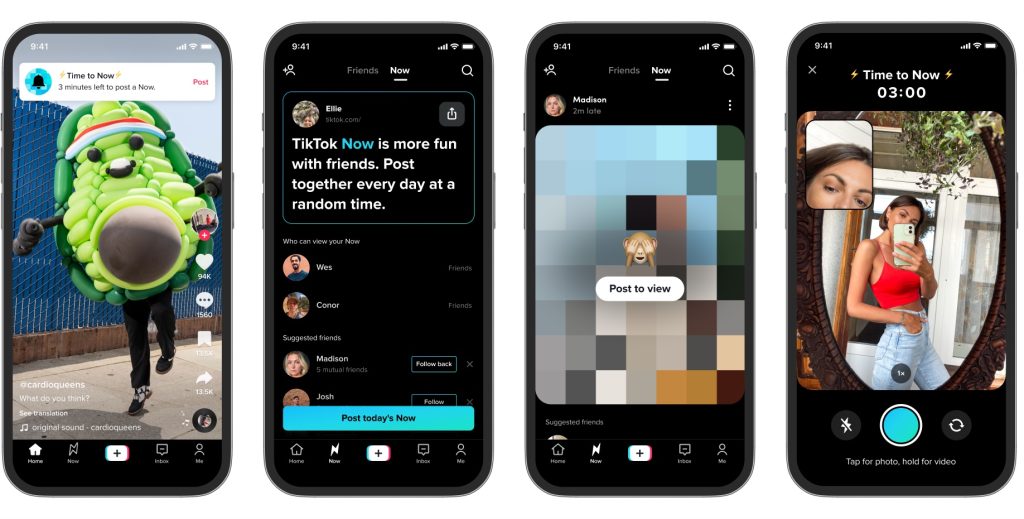
By prompting users to post within a randomly assigned daily time limit, TikTok Now introduces a sense of urgency that gamifies spontaneity. This blend of time pressure, social comparison, and habitual engagement creates a subtle reward loop. Though framed as a tool for authentic sharing, it subtly encourages compulsive behaviour, transforming everyday moments into performative rituals shaped more by timing than meaning.

Social media gives the impression that the number of likes and shares a person receives reflects how much others approve of them, which can significantly impact younger people’s sense of self-worth and identity.

Duolingo’s owl, Duo, began as a friendly learning mascot but became a symbol of streak anxiety. Through playful yet persistent notifications, Duo reminds users to complete daily lessons—often with guilt-inducing messages and sad animations. In 2025, Duolingo satirised this pressure by staging Duo’s dramatic “death,” turning user guilt into a viral marketing campaign.

This process doesn’t stop here. In fact, it is meant to be repeated over and over again. Apps often use variable reward schedules, keeping the user in suspense; they never know when they will get a reward. This uncertainty — Will I get likes? Did someone respond? — creates psychological tension that we constantly try to resolve by checking our devices repeatedly.

SHAPING BEHAVIOUR AND CREATING HABITS

Gamification encourages people to develop new habits. Most apps and platforms are designed to keep users engaged by prompting them to repeat specific actions. For instance:


  • TikTok gamifies engagement through personalised feeds, viral challenges, and creator incentives that reward consistent activity and interaction.


  • Instagram notifications prompt users to check likes and comments, fostering a cycle of posting, waiting, and validation.


  • Fitness apps offer daily step goals, badges, and challenges to encourage regular activity and foster accountability through metrics.


  • Language apps like Duolingo send reminders, award progress badges, and highlight streaks to ensure users don’t miss a day.

These systems operate based on behavioural economics theory — the nudge theory — which states that subtle design changes can significantly affect people’s behaviour.2 When goals, progress bars, and social comparisons are used, gamified systems motivate users to log in more often, spend more time, share more, and see how they compare to others — behaviours they might not exhibit otherwise.


Over time, users might shift their priorities, prioritising earning rewards over the main purpose of the app. For instance, the focus of learning a language shifts from developing a communication skill to maintaining a learning streak. A desire for validation replaces social connection.

Research found that a user’s constant interaction with apps that send notifications can increase their stress levels, decrease sleep quality, and impair memory capacity.

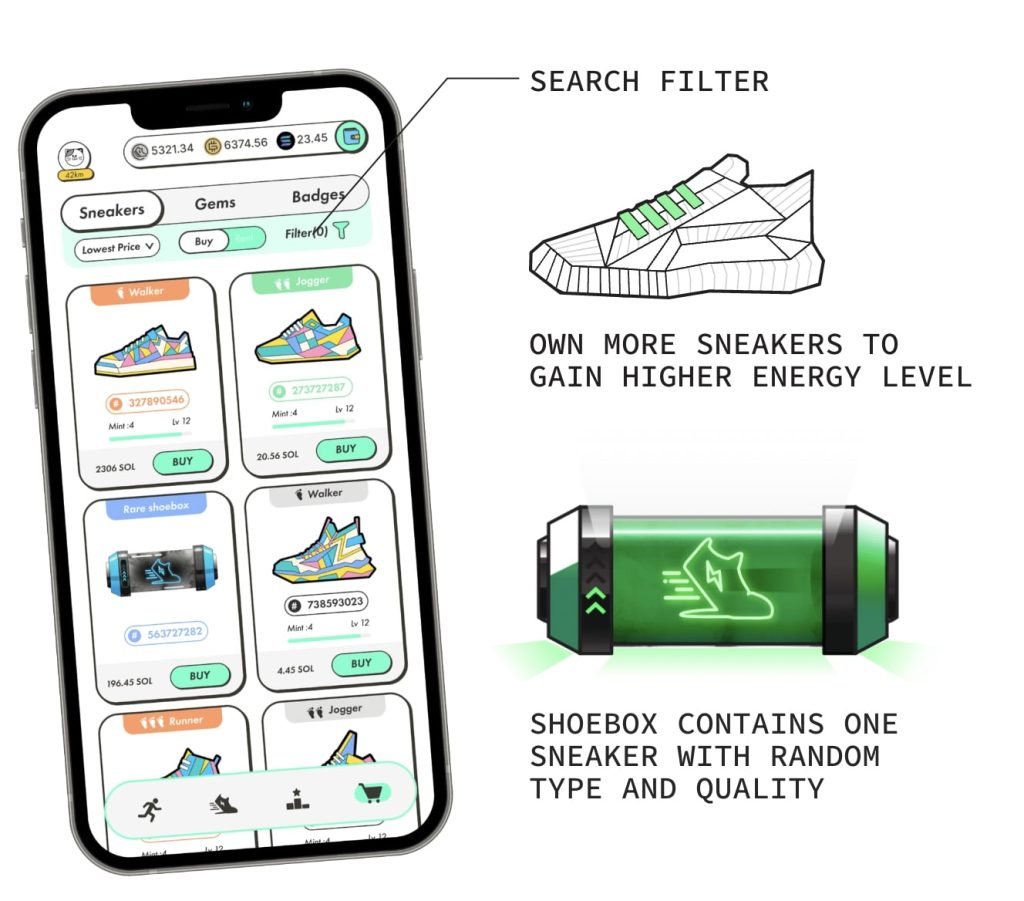
STEPN gamifies fitness by turning walking into a reward loop driven by NFT sneakers and crypto tokens. While it encourages physical activity, its play-to-earn mechanics blur lines between motivation and speculation, replacing intrinsic goals with market-driven incentives and exposing users to financial risk disguised as healthy habit formation.

SOCIAL VALIDATION AND THE COST OF CONSTANT PERFORMANCE

Gamification is not only about engaging people; it also treats engagement as a commodity. For instance, social media gives the impression that the number of likes and shares a person receives reflects how much others approve of them, which can significantly impact younger people’s sense of self-worth and identity3 If an uploaded photo doesn’t receive enough likes in an hour, a teenager may decide to delete it. Such behaviour demonstrates that the desire to earn points or badges overrides a person’s true motivations and self-expression.


Because of this, individuals may develop an alternate self to attract more attention rather than remaining authentic online. Over time, this could create a disconnection or identity crisis between their online persona and their true self.


Moreover, gamified systems can encourage people to remain digitally active throughout the day. Users often experience internal pressure, such as the urge to maintain their streaks, reply to messages right away, or check their notifications constantly. Because of this digital distraction, people find it difficult to engage with others face-to-face, become more anxious, and have a shortened attention span in the real world.4


Research found that a user’s constant interaction with apps that send notifications can increase their stress levels,5 decrease sleep quality,6 and impair memory capacity.7 This is due to the fear of missing out (FOMO) phenomenon, where users are never totally disconnected from the digital world.

When play becomes pressure


From streaks to push alerts, dark gamification turns digital life into a relentless performance loop. A 2025 global survey found that 40% of teens are now voluntarily limiting smartphone use to protect their mental health, citing anxiety, FOMO, and burnout driven by apps that reward attention and punish absence.

Photo: iStock / Edwin Tan

THE HUMAN COST: DISCONNECTION, BURNOUT, AND SURVEILLANCE

Despite its perceived fun and entertainment value, gamification presents serious issues. As user engagement intensifies, the boundary between voluntary play and compulsive behaviour becomes increasingly blurred. This trend is most noticeable when “dark gamification” manifests, where design pushes users to use the app more than they should, negatively affecting their well-being.8


Some of the human costs due to this occurrence involve:


  • Mental fatigue and burnout
    Users are always expected to check, respond, and stay continuously engaged.


  • Social comparison and reduced self-esteem
    Frequent comparison of oneself with others can lead to self-doubt, especially on platforms that showcase only the best aspects of people’s lives.


  • Eroded attention spans
    Users tend to look for fast rewards instead of sustained focus due to the app’s design.


  • Surveillance capitalism
    Tech companies track, examine, and monetise the data generated by every tap, like, and scroll of users.


In summary, these tools serve a dual purpose: they aim to foster connections with our thoughts and meaningful face-to-face relationships, but they also frequently detach us from reality.

RECLAIMING CONNECTION IN THE DIGITAL AGE

If gamification exploits our psychological weaknesses to keep us engaged, what can we do to avoid it, or can tech companies redesign their systems to allow users to pursue emotionally meaningful interactions in society?


1. Design for Well-being

Tech companies must ensure they act ethically. It would be better for their platforms to measure user satisfaction, mental well-being, and real social connections instead of merely focusing on screen time.9 On a positive note, several platforms are experimenting with features like hiding likes, sending reminders about excessive screen time, or encouraging users to check their mood to promote wiser and healthier usage.


2. Digital Literacy and Awareness

It is important for users to understand how gamification works. More importantly, they should be aware of technology’s influence on their behaviour and learn how to set boundaries around its use. When people understand the psychological triggers — such as the reason behind endless scrolling — they are better equipped to manage their time and engage with digital platforms more intentionally.


3. Redefining Metrics of Success

Not relying solely on the number of likes and followers as a measure of success, for example, can help users interact online in a more authentic manner. BeReal10 is an example of a platform that promotes genuine sharing by prohibiting the use of filters and likes. We ought to focus on expressing our values rather than trying to garner as many likes as possible. The aim is simply to be yourself in the digital world, just as you are in the real world.

We must remain aware of our digital actions, occasionally step back from the constant urge to seek digital rewards, and demand that technology companies practice techno-ethics.

Australia draws the line


In a world of likes and loops, Australia is taking a hard stance by banning children under 16 from joining social media starting December 2025. With no parental consent allowed and fines of up to 50 million Australian dollars, it is the world’s strictest move to protect teens from algorithmic harm.

Photo: iStock / pixdeluxe


4. Rebuilding Offline Spaces

Implement real-world practices that existed long before the emergence of digital tools, such as sharing meals without consistently looking at mobile devices, organising tech-free weekends, and immersing oneself in personal hobbies, which can help rebuild human connection. Similarly, community meetups, group physical exercise, and other types of analogue activities provide opportunities for deep, meaningful presence without digital metrics.


5. Mindful Technology Use

Practising digital minimalism, mindfulness, and time-boxing consistently can help users take charge of their online activities. Picking the right moments and understanding the specific reasons why a user wishes to use the app can help avoid addiction and ensure they adhere to their intended usage. In addition, certain apps like Freedom11 and Forest12 help users by blocking distractions and disabling gamification features.

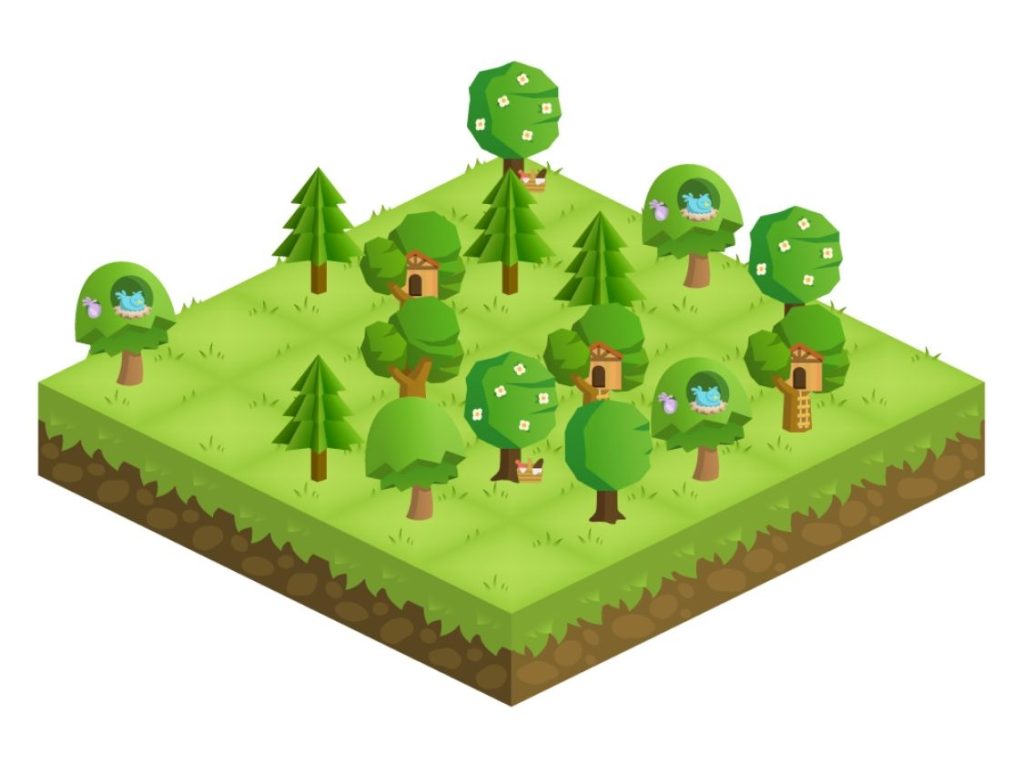
Unlike most gamified platforms that reward constant use, Forest flips the model and turns non-engagement into the goal. While your focus timer runs, Forest blocks or discourages access to apps you’ve marked as distractions. If you stay focused and avoid switching apps, your virtual tree grows and becomes part of your forest.

CONCLUSION

Gamification plays a prominent role in today’s attention economy. It affects our actions, changes habits, and frequently keeps us from connecting with ourselves and others. Even though it can be used positively, such as helping people learn or increasing work productivity, it primarily serves the interests of tech companies, which seek to capture more of their users’ time, turning it into more data and, ultimately, more revenue. If we want to reconnect in this digital age, we need to understand these gamification mechanisms and work to overcome them thoroughly. This means we must remain aware of our digital actions, occasionally step back from the constant urge to seek digital rewards, and demand that technology companies practice techno-ethics. Only then can we strive to rebuild genuine, powerful, and meaningful relationships in a world filled with streaks, badges, and endless scrolling. ∞

KUEK THIAM YONG

Kuek Thiam Yong is a lecturer at University Tunku Abdul Rahman (UTAR), Malaysia, specialising in corporate governance, management, and tourism. With extensive research, publications, and conference presentations, his academic focus includes entrepreneurship, organisational behaviour, and higher education. He brings prior industry experience and a strong interdisciplinary approach to academia.

CHOONG YUEN ONN

Dr Choong Yuen Onn is an Associate Professor and Deputy Director at UTAR, is a dedicated educator, researcher, and consultant with over 175 publications and multiple international collaborations. With over 25 awards and RM 4.5 million in research funding, he mentors postgraduate students and serves on editorial boards, demonstrating his global influence and academic leadership.

KHOR SAW CHIN

Dr Khor Saw Chin is an Assistant Professor at UTAR. She teaches marketing courses and researches Intellectual Capital, Operations Management, and Consumer Behaviour. She also supervises postgraduates and serves as a reviewer and editor for international academic journals.

AUGUST 2025 | ISSUE 14

SCREENS BETWEEN US

  1. Zichermann, Gabe, and Christopher Cunningham. Gamification by Design: Implementing Game Mechanics in Web and Mobile Apps. O'Reilly Media, Inc, 2011.
  2. Thaler, Richard H, and Cass R Sunstein. Nudge: Improving Decisions About Health, Wealth, and Happiness. Amsterdam Law Forum; HeinOnline: Online, 2008, p 89.
  3. Twenge, Jean M. iGen: Why Today's Super-Connected Kids Are Growing Up Less Rebellious, More Tolerant, Less Happy — and Completely Unprepared for Adulthood — and What That Means for the Rest of Us. Simon and Schuster, 2017.
  4. Turkle, Sherry. Reclaiming Conversation: The Power of Talk in a Digital Age. Penguin, 2015.
  5. Heinisch, Judith S, et al. “Investigating the Effects of Mood and Usage Behaviour on Notification Response Time.” arXiv preprint, arXiv:2207.03405, 2022.
  6. Han, Xiaoning, et al. “Electronic Media Use and Sleep Quality: Updated Systematic Review and Meta-Analysis.” Journal of Medical Internet Research, vol 26, 2024, p e48356.
  7. Wiradhany, Wisnu, et al. “Are Social Media Notifications Distracting? The Effects of Social Media Logos and Notification Badges on Visual Working Memory Performance.” Experimental Psychology, vol 71, no 4, 2024, p 189.
  8. Werbach, Kevin, and Dan Hunter. For the Win, Revised and Updated Edition: The Power of Gamification and Game Thinking in Business, Education, Government, and Social Impact. University of Pennsylvania Press, 2020.
  9. Huang, Wendy Hsin-Yuan, and Dilip Soman. “Gamification of Education.” Report Series: Behavioural Economics in Action, vol 29, no 4, 2013, p 37.
  10. BeReal — Your Daily Dose of Real Life. BeReal, https://bereal.com. Accessed 18 Jun 2025.
  11. Freedom | Block Websites, Apps, and the Internet. Freedom, https://freedom.to. Accessed 18 Jun 2025.
  12. Forest — Stay Focused, Be Present. Forest, https://www.forestapp.cc. Accessed 18 Jun 2025.

About

Leaders and changemakers of today face unique and complex challenges. The HEAD Foundation Digest features insights and opinions from those in the know addressing a wide range of pertinent issues that factor in a society’s development. 

Informed opinions can inspire healthy discussions and open up our imagination to new possibilities. Interested in contributing? Write to us at info@headfoundation

Stay updated on our latest announcements on events and publications

About

Leaders and changemakers of today face unique and complex challenges. The HEAD Foundation Digest features insights and opinions from those in the know addressing a wide range of pertinent issues that factor in a society’s development. 

Informed opinions can inspire healthy discussions and open up our imagination to new possibilities. Interested in contributing? Write to us at info@headfoundation

Stay updated on our latest announcements on events and publications

Join our mailing list

Stay updated on all the latest news and events

Join our mailing list

Stay updated on all the latest news and events