Globally, and increasingly across Southeast Asia, malnutrition no longer presents as a single story of undernourished children. Rather, like a forked road, malnutrition is bifurcating into two alarming and growing extremes: stunting on one side and childhood obesity on the other.
I see this not just in statistics or clinical reports, but in everyday moments — school mornings, on the bus, in supermarket aisles, and in the consulting room.
A tale of two extremes
India is home to one of the world’s largest populations of undernourished children, with 35.5% of children under five stunted, even as more than 41 million children aged 5–19 have excess weight, including around 14 million with obesity. These extremes of malnutrition often coexist within the same communities, households, and even children 1
Source: Photo: Davide Bonaldo / Alamy
As a mother, I’ve packed lunchboxes that look full, yet I still pause and wonder: Is this nourishing, or simply filling? As a functional nutritionist, I sit with families who are trying their best, yet feel confused by conflicting messages. Parents are worried about children who eat “enough” but who are smaller than their peers, constantly off school with illness, or slow to meet developmental milestones. In other settings, sometimes within the same day, I meet families grappling with the opposite concern: children gaining weight rapidly, already showing signs of high cholesterol, insulin resistance or metabolic-associated fatty liver disease before they reach their teenage years.
Stunting and childhood obesity are not separate crises — they are two visible outcomes of the same invisible forces.
This is the paradox of modern childhood nutrition. Malnutrition is no longer only about the absence of food. Malnutrition represents profound disruptions in growth, development and lifelong health for our next generation. Today, stunting and childhood obesity are not separate crises — they are two visible outcomes of the same invisible forces. And both are symptoms of a deeper systemic problem: how our modern environments shape the way children eat, move, grow, and thrive.
As a functional nutritionist and mother, I’m troubled by both roads, as they’re widening, yet often start at the same beginning. I often hear a few commonalities — “my child has a sweet tooth”, or “my child loves junk food”, or “we rarely cook at home”. On the surface, their symptoms differ. Underneath, inflammation is the common thread.
What makes today’s split landscape particularly complex is that these extremes — stunting and obesity — now coexist within the same communities, and even sometimes in the same households. It is not uncommon for a child to be stunted in height due to poor undernutrition in early years, only to be obese with increased risks of metabolic syndrome later on. To the untrained eye, this seems contradictory. How can a child be both under- and over-nourished?
The answer lies beyond calories. It lives in inflammation, in gut health, and in our food environments.
Not as innocent as they look
From breakfast cereals and yoghurt drinks to chicken nuggets and processed cheese slices, many foods seen as child-friendly are ultra-processed, containing additives and refined ingredients increasingly linked to chronic inflammation.
Photo: AMR Image / iStock
Even if linear growth is later regained, the long shadow of early stunting often remains — shaping educational attainment, earnings and long-term health in ways that cannot be entirely undone.
STUNTING: THE SILENT SIDE OF MALNUTRITION
Stunting, defined as low height for age, is primarily caused by chronic, long-term poor nutrition. Stunting is the story of early life nutritional deprivation and inflammation during some of the most critical periods of a child’s brain and body development. According to the Global Nutrition Report, the prevalence of stunting in Southeast Asia is 27.4%. It is these first 1,000 days of life — from conception to around age 3 — that form a foundational period for brain, immune and metabolic health. This window, which includes maternal and neonatal diet, mode of delivery, antibiotic use, and first foods, all have profound impacts on the developing microbiome and can alter the trajectory of the microbiome as well as the foundations for lifelong health. 2 I often describe the microbiome to parents as the “software that runs our internal hardware.” If that software is disrupted early on, the system requires much more work to try to fix, and even more to update correctly and optimally.
But it is not just a matter of nutrient availability, but also about nutrient absorption. Children living in high-burden environments, such as rural or underserved areas in Southeast Asia, often face enteric infections due to contaminated water and exposure to toxins. Children are more susceptible to these environmental factors, and enteric dysfunction can impair nutrient absorption, even if food is available. More calories don’t fix this problem, especially if the gut is inflamed and unable to do its job of absorbing vital nutrients.
Stunting, therefore, is not only a failure of food availability. It reflects a deeper systemic failure to provide children with non-inflammatory food, nutrient-dense food environments, safe sanitation, and reliable access to healthcare. Even if linear growth is later regained, the long shadow of early stunting often remains — shaping educational attainment, earnings and long-term health in ways that cannot be entirely undone.
Arsenic exposure and child growth
In Bangladesh, exposure to arsenic-contaminated drinking water has been associated with poorer child growth outcomes, with studies linking higher arsenic exposure to reduced body size and impaired growth in early childhood.3
Photo: ZUMA Press / Alamy
CHILDHOOD OBESITY: THE OTHER SIDE OF THE SAME PROBLEM
On the other side of the forked road lies childhood obesity, rising rapidly in children and adolescents across most low and middle-income countries. 4 According to the Global Nutrition Report, in Southeast Asia, the average prevalence of overweight is 7.5%, which is higher than the global average of 5.7%. The rising number of childhood obesity cases reflects our society’s increasing overexposure to cheap, low-nutrient quality, highly processed foods. This description of food has become a default for many modern families. And the societal acceptance of ultra-processed foods as somehow “normal” or “cultural” should be changed.
Sugar in various forms, refined starches, industrial oils, flavourings and other additives and preservatives found in ultra-processed foods (UPFs), snacks, and beverages alter appetite regulation, disrupt insulin sensitivity and create inflammation in developing bodies. Paradoxically, the co- occurrence of stunting and overweight or obesity in the same individual has become an emerging layer of malnutrition. 5
Designed to crave
Junk food companies are targeting children on social media through personalised, immersive content that promotes ultra-processed foods. Constant and often invisible, these digital campaigns are far harder to regulate than traditional advertising.
Source: The Conversation UK
These products are no longer sold as simply “junk food”, but they are sold as childhood itself — wrapped in nostalgia.
As a parent, walking down grocery aisles or into any convenience store, I’m overwhelmed by the number of UPFs targeting children. Shelves are lined with chocolate drinks, isotonic drinks, all sorts of sweetened beverages, cookies, crisps, candies, and the list goes on. These UPFs are created to be highly palptable and addictive. These products are no longer sold as simply “junk food”, but they are sold as childhood itself — wrapped in nostalgia. The danger is not the occasional treat but this normalisation. When UPFs become daily staples, children tend to consume more calories but are functionally malnourished. 4
Too much, too fast
China has the world’s highest number of children with obesity, with rates rising rapidly, especially in urban areas. This reflects a broader global trend, where childhood overweight has surged from around 4% in 1990 to over 20% today, with more children now expected to live with obesity than underweight worldwide for the first time.6
Photo: Imaginechina / Alamy
Stunting and obesity as a double burden of childhood malnutrition pose a real public health challenge. Obesity in childhood is strongly associated with increased risk for chronic diseases such as non-alcoholic fatty liver disease (NAFLD), also known as metabolic-associated steatotic liver disease (MASLD), type 2 diabetes, cardiovascular disease, metabolic diseases, orthopaedic issues and psychosocial problems. 7 Much like stunting, environmental factors make this not just a simple matter of individual choice but the product of structural forces and systems. Aggressive food marketing, as well as economics, where the cheapest calories are often the least healthy, is prevalent across the globe, but seeing it more and more in Southeast Asia.
THE GUT MICROBIOME: THE MISSING LINK
Both ends of the malnutrition spectrum share a key underlying factor: disrupted gut microbiome development.
In healthy development, a diverse and resilient gut microbiome supports nutrient absorption, immune balance, metabolic regulation and appetite. Unfortunately, today, modern childhood is increasingly hostile to this process. Frequent antibiotic exposure, antimicrobial cleaning products, chemical pollutants and low-fibre diets — all disrupt microbial diversity. This disruption is known as dysbiosis, which has both short-term and potential long-term consequences, skewing the microbiome towards an inflammatory state.
While stunting and obesity outwardly look different, the standard pathway is inflammation. Inflammation diverts energy away from growth and neurodevelopment and shifts the immune system toward heightened activation. Addressing malnutrition also means addressing inflammation through food quality, environment, and gut health — not just calories.
It seems time we recognise the longer and broader impacts of early exposures on a child’s gut and understand that food is a powerful mediator of growth and metabolic health. Through the gut, we can either nurture resilience or exacerbate vulnerability.
Who owns their appetite?
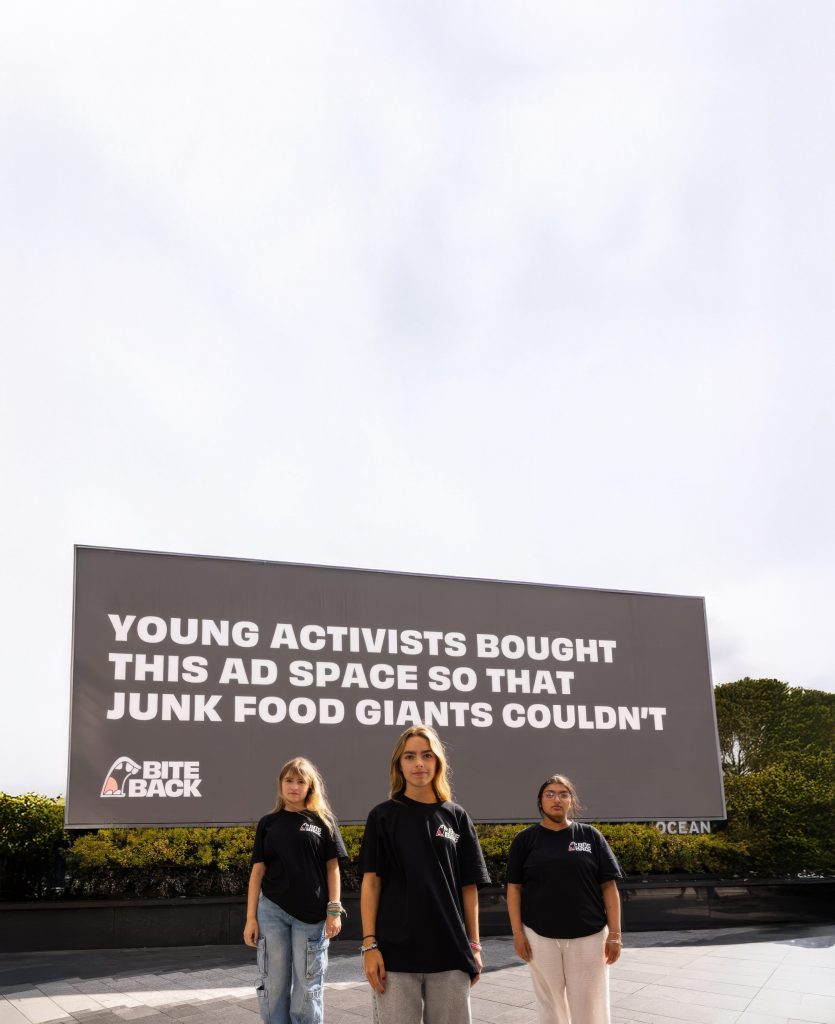
Bite Back 2030 is a UK-based, youth-led movement campaigning to end the aggressive marketing of junk food to children. It challenges public advertising, pushes for policy change, and exposes how food corporations shape young people’s choices to create healthier environments.
Source: Bite Back 2030
Through the gut, we can either nurture resilience or exacerbate vulnerability.
WHAT CAN BE DONE?
We often ascribe blame to genetics or human impulses or a myriad of other reasons, but in reality, both stunting and obesity are byproducts of a systemic problem. Systemic problems require systemic solutions. It sounds simple, but we need our policymakers to play a transformative role in improving child nutrition by helping create environments that make healthy choices accessible, affordable and appealing. From access to clean water to enhancing the quality of school meals to strengthening maternal and early childhood nutrition programmes, there are many tools available to public sector organisations once they are committed to solutions. But the key first step is to recognise the systemic nature of these conditions. We need to recognise that we need more stringent regulation regarding the marketing of UPFs to children and teens. We need to implement clear front-of-pack labelling of harmful ingredients and try to avoid them altogether. We need to better support local production of nutritious whole foods. To proactively shift population habits, we need first to recognise that our existing food ecosystem isn’t matching up to our inner gut ecosystem’s needs.
Too much, too fast
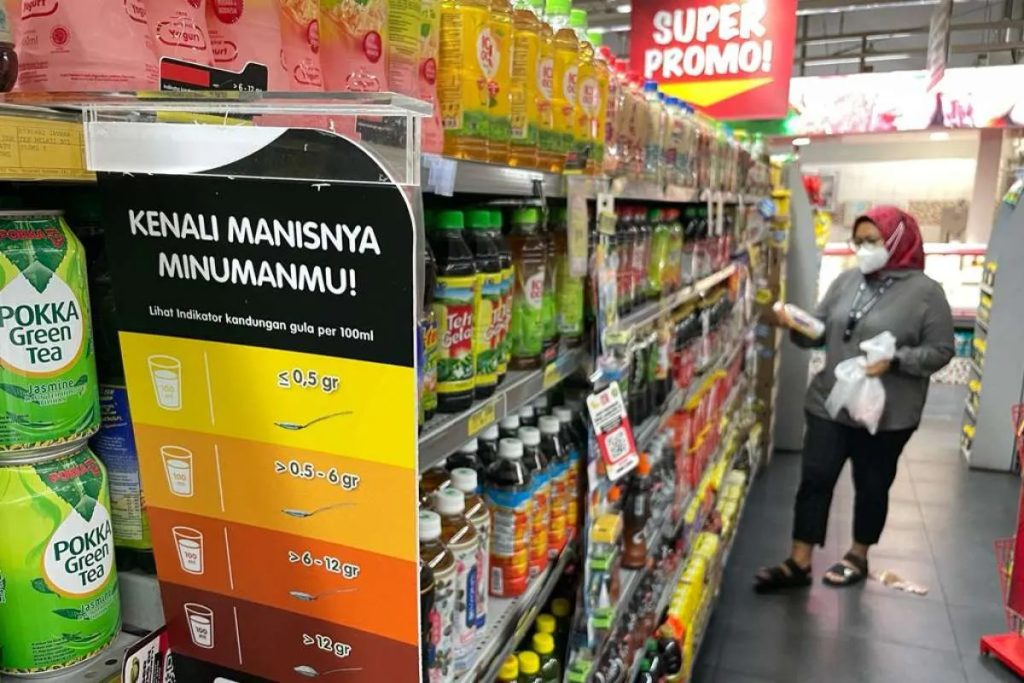
Malaysia’s 2019 sugar tax was later reinforced by the Healthier Choice Logo initiative and mandatory front-of-pack nutrition grading. Since then, 242 ready-to-drink beverages have been reformulated with lower sugar content under the country’s 8 healthier labelling framework.
Source: Kontan.co.id
I understand the tensions between nutrition ideals and real-life pressures. Between rushing from school pickups and activities, budget constraints and the need for convenience and taste, it is unrealistic to cook every meal from scratch or avoid all processed foods. So, as individuals, we have to learn to focus on consistency rather than perfection. Most days aim for whole foods, simple home-cooked meals and forgive the meals that might not go as planned. But at a societal level, should parents have to choose between affordability and nourishment?
While stunting and obesity may seem like two separate roads, they often begin with the same fractured starting point. Unless we call out the warning signs and acknowledge the potential danger ahead, we will keep steering the next generation in the same direction. Isn’t it time we change course? ∞
JIEUN WRIGLEY
Jieun Wrigley is a functional nutritionist and founder of Rapid Nutrition Therapy, a bespoke Singapore-based nutrition consultancy.
She also serves as a functional nutritionist at COMO Shambhala Singapore. After graduating from Brown University, she earned a Master’s in Nutrition Science from Tufts University, US, and is currently a doctoral candidate in Clinical Nutrition. She is a member of the American Society for Nutrition and the Singapore Nutrition and Dietetics Association.
With a global perspective shaped by years spent in Singapore, Hong Kong, and Dubai, she supports clients in addressing the root causes of health issues, including gut and brain health, hormonal imbalances, and metabolic function. She works collaboratively with medical professionals to integrate nutritional frameworks into patient care. She is also a contributing nutrition writer for The Straits Times.

2026 | ISSUE 15
THE FIGHT FOR (GOOD) FOOD
- Ministry of Health and Family Welfare (India), National Family Health Survey (NFHS-5), 2019–21; World Obesity Federation, World Obesity Atlas 2026.
- Laue, Hannah E, et al. “The Developing Microbiome From Birth to 3 Years: The Gut-Brain Axis and Neurodevelopmental Outcomes.” Frontiers in Pediatrics, vol 10, 2022, 815885. https://doi.org/10.3389/ fped.2022.815885
- Saha, KK, et al. “Pre- and Postnatal Arsenic Exposure and Body Size to 2 Years of Age: A Cohort Study in Rural Bangladesh.” Environmental Health Perspectives 120, no 8, 2012.
- Popkin, Barry M, and Amos Laar. “Nutrition Transition’s Latest Stage: Are Ultra-Processed Food Increases in Low- and Middle-Income Countries Dooming Our Preschoolers’ Diets and Future Health?” Pediatric Obesity, vol 20, no 5, 2025, e70002. https://doi.org/10.1111/ ijpo.70002.
- Zemene, MA, et al. “Concurrent Stunting and Overweight or Obesity Among Under-Five Children in Sub-Saharan Africa: A Multilevel Analysis.” Archives of Public Health, vol 81, no 1, 2023, p 119. https:// doi.org/10.1186/s13690-023-01138-8.
- NCD Risk Factor Collaboration (NCD-RisC), “Worldwide trends in underweight and obesity from 1990 to 2022: a pooled analysis of 3663 population-representative studies,” The Lancet 403, no. 10431 (2024): 1027–1050; World Obesity Federation, World Obesity Atlas 2026.
- Goel, Ankit, et al. “Causes, Consequences, and Preventive Strategies for Childhood Obesity: A Narrative Review.” Cureus, vol 16, no 7, 2024, e64985. https://doi.org/10.7759/cureus.64985
- Bernama, “242 drinks reformulated to reduce sugar under Healthier Choice Logo initiative,” The Star, 17 Dec 2024.