

In many Indonesian classrooms, nutrition is taught quietly using modest approaches that help teachers feel at ease when delivering the nutrition messages. To the extreme, this can include a scene in which a poster about balanced meals hangs slightly crooked on the wall in schools in rural Indonesia. Teachers in many urban schools reported having to repeatedly remind students to eat breakfast before exams.
Nevertheless, a contrasting view remains outside the school gate: brightly coloured carts selling attractive sugary drinks, fried snacks, and instant noodles for a few thousand rupiah (about USD 0.10–0.30). The lesson inside schools and the reality outside rarely meet.
Urban plates, changing tastes
In Indonesia’s cities, traditional home-cooked meals are increasingly giving way to pizza, fried chicken, and other fast foods. Expanding chains, delivery platforms, and social media are reshaping how young people access, perceive, and consume food in everyday life.
Photo: rudi_suardi / iStock
Nutrition literacy is not simply about knowing what is healthy and nutritious; it is about navigating choices, environments, culture, economics, and power.
This gap captures the challenge of nutrition literacy in Indonesia today. Nutrition literacy is not simply about knowing what is healthy and nutritious; it is about navigating choices, environments, culture, economics, and power. It is the ability to understand food, evaluate information, and make decisions that support health, both individually and collectively. In a country as vast and diverse as Indonesia, building nutrition literacy requires more than textbooks or campaigns. It requires trust, relevance, and a careful balance between grassroots motivation and systemic support.
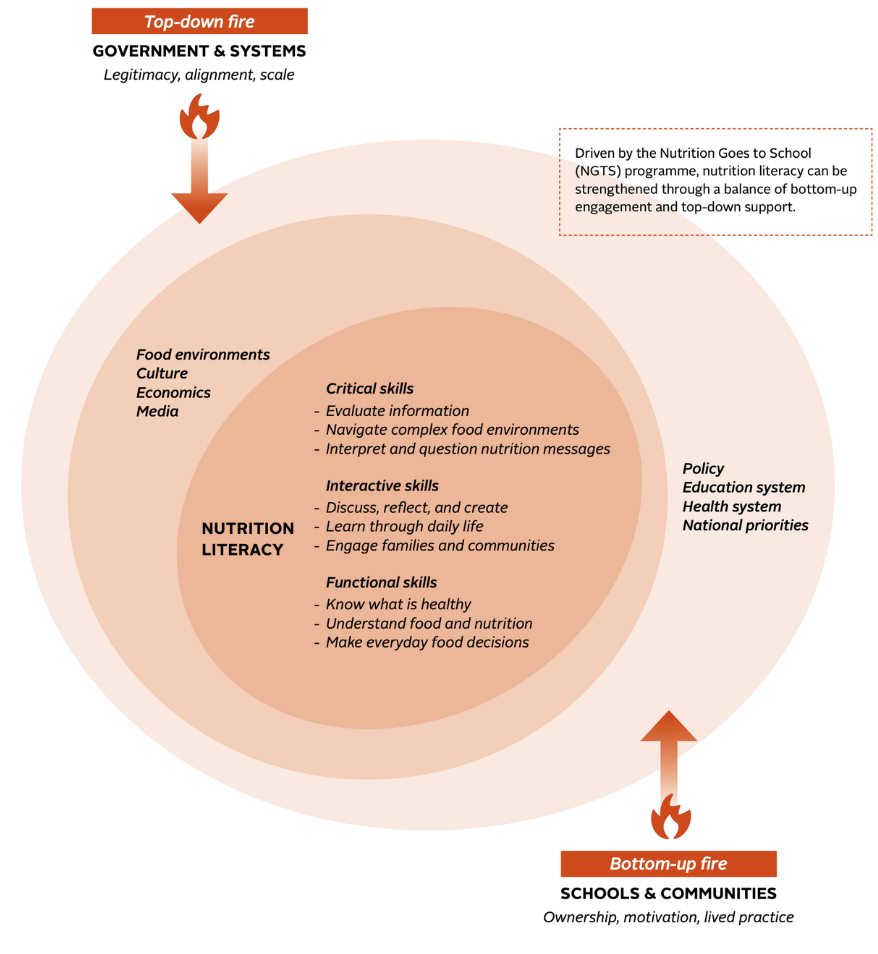
Like cooking a cake, nutrition literacy needs heat from both the bottom and the top.
THE STATE OF THE ART:
NUTRITION LITERACY BEYOND KNOWLEDGE
Globally, nutrition literacy has evolved from a narrow focus on nutrients to a broader understanding that includes food systems, culture, media influence, and social norms. Best practices emphasise experiential learning, critical thinking, and supportive environments — not just for information delivery, but for developing nutrition literacy.
In Indonesia, this evolution is both necessary and urgent. Children and adolescents face a triple burden of malnutrition: undernutrition and micronutrient deficiencies coexist with rising overweight and diet- related non-communicable diseases. A lack of fruit and vegetable consumption, coupled with a sedentary lifestyle, has been persistently associated with these poor health outcomes. We are just recently aware that ultra-processed foods are increasingly accessible, while traditional dietary patterns are eroding. In addition, social media floods young people with conflicting nutrition messages, often driven by trends rather than evidence.
A generation still at risk
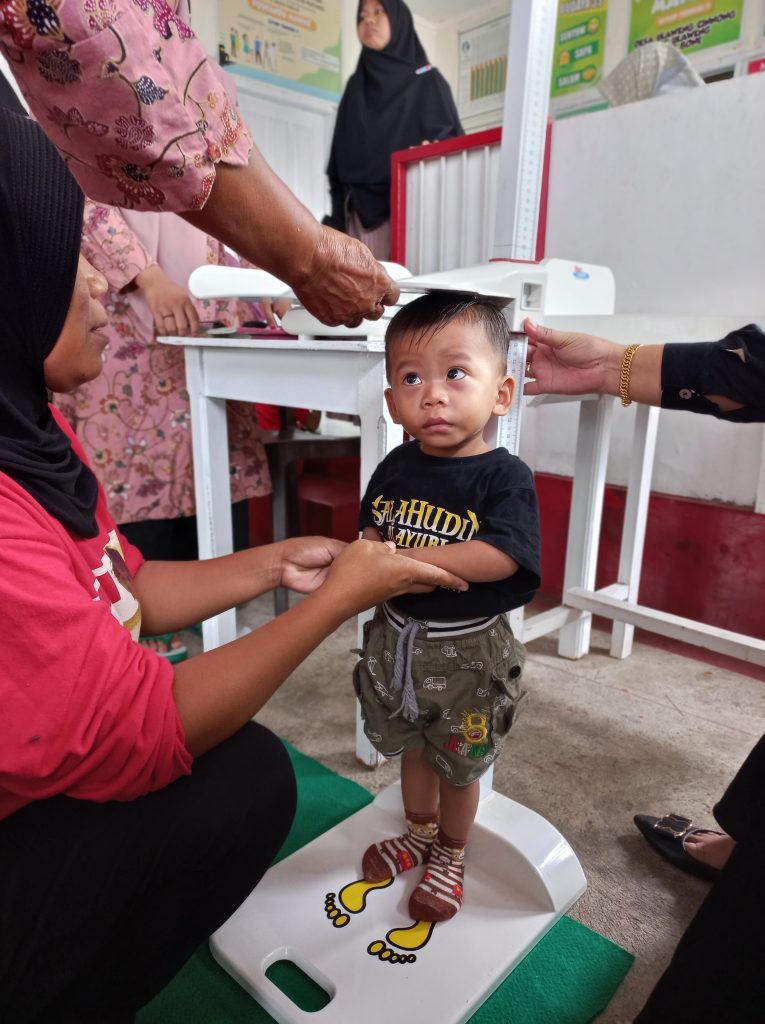
While Indonesia has made progress in reducing stunting, nearly one in five children are still affected, posing significant risks to cognitive development and long-term productivity.
Photo: As Arsyil / Shutterstock
Children and adolescents face a triple burden of malnutrition: undernutrition and micronutrient deficiencies coexist with rising overweight and diet-related non- communicable diseases.
Schools and communities sit at the centre of this transformation. They are where habits are formed, identities are shaped, and social norms are negotiated. Yet schools are also constrained by crowded curricula, limited resources, and competing priorities. Community-level initiatives face similar challenges, especially when programmes are perceived as externally imposed or disconnected from local realities.
This is where many well-intentioned nutrition programmes struggle: they either rely too heavily on top-down mandates or remain small, inspirational pilots that fade when funding ends.
Across Indonesia and the broader Southeast Asian region, several best practices in nutrition literacy have emerged:
1. Embedding nutrition into daily school life
Not just lessons — through extra-curricular activities, school canteens, routine school agendas, and role modelling by teachers.
2. Using participatory approaches
Where students discuss, reflect, and create rather than passively receive information.
3. Engaging families and communities
Recognising that food choices extend far beyond school walls.
4. Respecting local food culture
Rather than replacing it with generic “healthy eating” messages.
5. Building capacity and empowerment
By equipping teachers and school leaders with confidence, fostering ownership among school communities (both internal and external school stakeholders).
Yet even when these elements are present, sustainability remains the hardest challenge. Programmes often depend on champions — an enthusiastic principal, a dedicated teacher, or a committed local partner. When leadership changes or funding cycles end, momentum is lost. This is complicated by a lack of community participation and a weak sense of belonging to the programme.
What is missing is balance.
To feed a nation
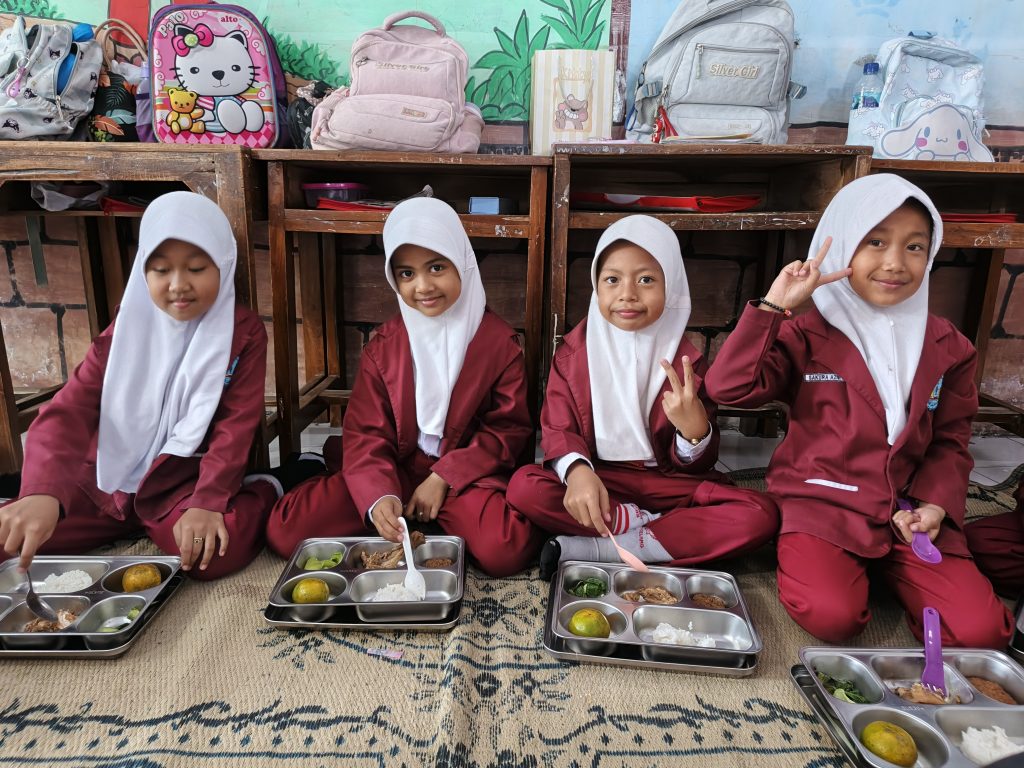
Launched in 2024 as a government-led national initiative, Indonesia’s Free Nutritious Meal Programme (Makan Bergizi Gratis) aims to deliver daily meals to millions of schoolchildren — a scale that requires substantial coordination and resources to sustain.
Photo: Verra Rizkana Safitri / Shutterstock
THE INDONESIAN CONTEXT: WHY BALANCE MATTERS
Indonesia’s education and governance systems are complex. Schools operate with a degree of autonomy but are also shaped by national curricula, provincial and district-level priorities, and ministerial regulations. Nutrition, meanwhile, spans multiple sectors — education, health, social protection, food systems — each with its own mandates and bureaucracies.
In this context, sustainability cannot rely on pressure alone. If schools feel burdened by yet another programme, resistance grows. If government involvement is absent, programmes remain fragile and peripheral.
Indonesia needs approaches that motivate schools from within, while being recognised and supported from above.
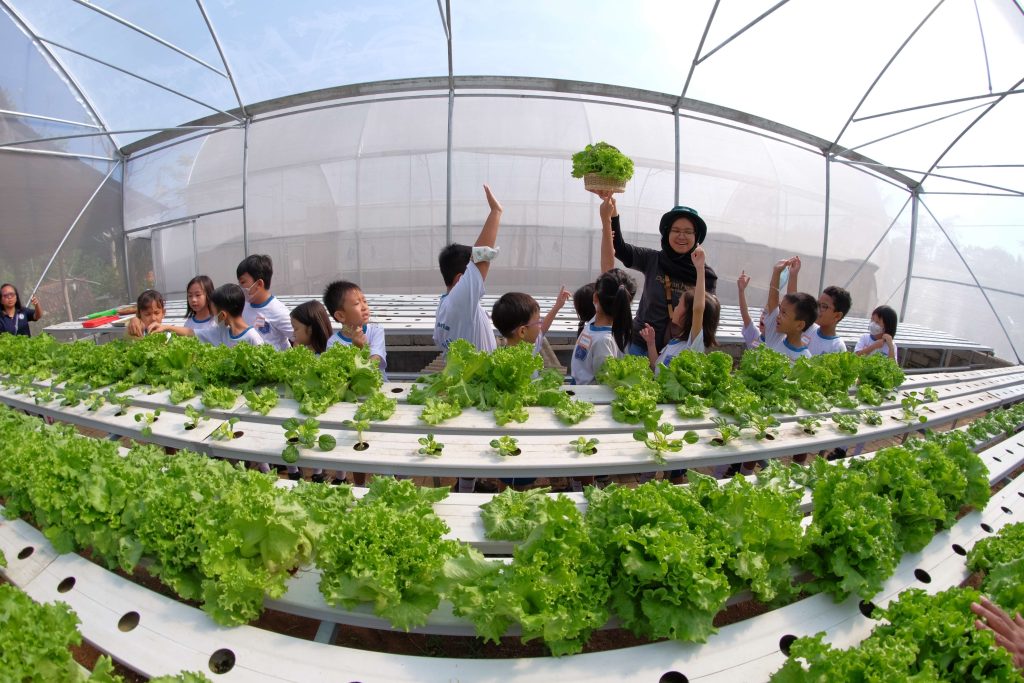
Food as education
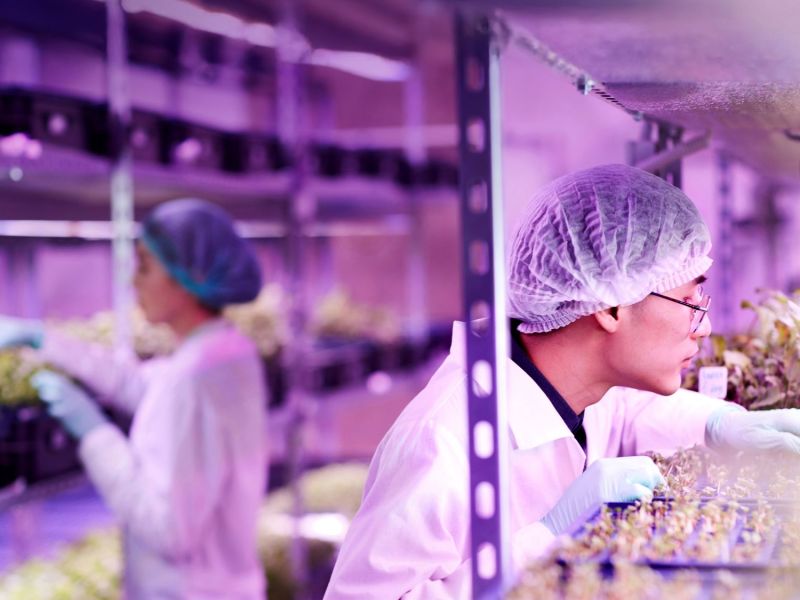
Hands-on food education, including visits
to hydroponic farms, is gaining momentum in Indonesia as schools and communities explore new ways to strengthen nutrition awareness, food security, and environmental literacy among children through direct engagement with food production.
Photo: HarfiBimantara / Shutterstock
NUTRITION GOES TO SCHOOL: FIRE FROM THE BOTTOM AND THE TOP
The Nutrition Goes to School (NGTS) programme offers a compelling example of how this balance can be achieved.
At its core, NGTS starts from the bottom. It respects schools as living ecosystems rather than passive recipients of instructions. Teachers are not treated as mere implementers, but as co-creators. School leaders are encouraged to reflect on their own contexts — urban or rural, public or private, resource-rich or constrained — and to aspire to achieve specific school awards, and to adapt activities accordingly to the set school priorities.
Rather than overwhelming schools with technical jargon, NGTS focuses on practical, relatable concepts: breakfast habits, snacking choices, and food diversity. NGTS also encourages schools to align their activities to support healthier food environments through food modification at the school canteens and food education through the school garden. Students are exposed to dialogues and observations through their own food environments. So, learning becomes personal.
This bottom-up fire creates motivation. Schools feel ownership. Teachers feel capable. Students feel seen.
But NGTS does not stop there.
Recognising that aspiration alone cannot sustain change, the programme must actively engage government stakeholders. This aligns with national nutrition priorities, education standards, and school students’ health strategies. By speaking the language of policy without losing its human touch, NGTS positions itself not as an extra burden, but as a solution that helps institutions meet their goals.
Since its conception in 2016, the NGTS programme has aimed to assist schools in enhancing their existing School Health Unit (Unit Kesehatan Sekolah) and to facilitate their achievement of nationally recognised school awards such as Healthy School (Sekolah Sehat), Environmentally Friendly School (Sekolah Adiwiyata), and many others. Although originally developed to support school programmes and activities under the coordination of the Indonesian Ministry of Education, NGTS has also benefited madrasahs (Islamic schools) coordinated under the Ministry of Religious Affairs.
Nutrition Literacy: “Fire from Both Sides”
Indonesia needs approaches that motivate schools from within, while being recognised and supported from above.
NGTS works through stages: schools are first exposed to NGTS training (initiation phase), then receive technical support from local
partners (strengthening phase), and finally show independence in programme monitoring and documentation for reporting to the local education office (institutionalisation phase). So far, the programme has completed two rounds of school institutionalisation and reached 41 schools and madrasahs intended to inspire nearby schools. This achievement has gained the awareness and support of the local and central governments.
This top-down fire provides legitimacy. It opens doors to scale-up, integration, and long-term support.
Like a cake baked evenly, the programme benefits from heat below and above.
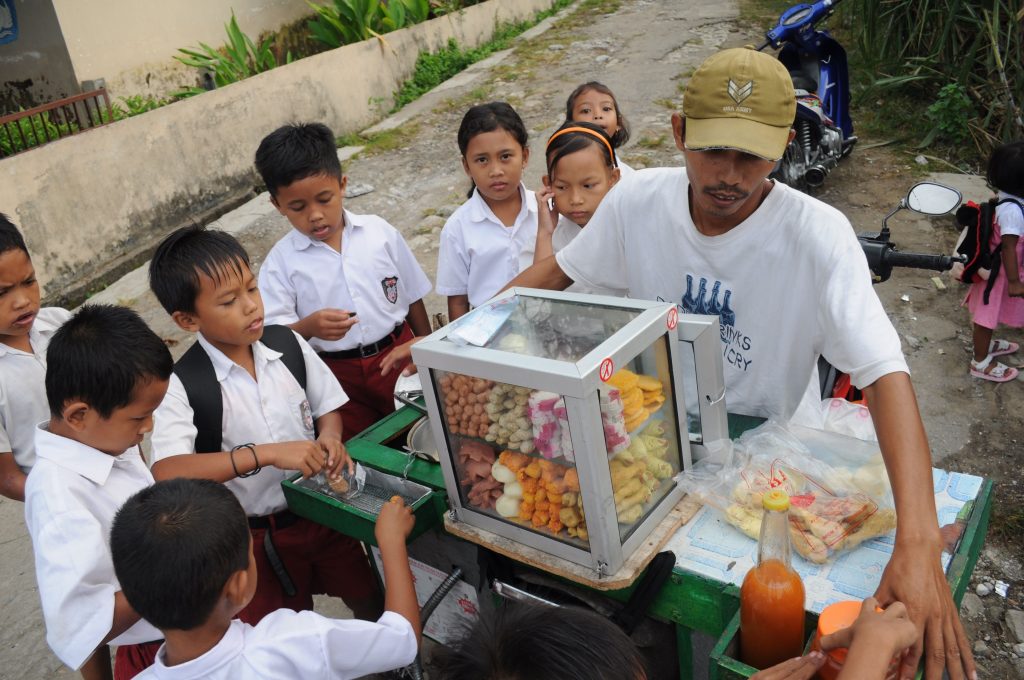
What children can afford
Food choices are often shaped less by knowledge than by affordability, access, and environment. Across Indonesia, inexpensive street snacks and sweetened drinks sold outside schools remain a daily part of children’s diets, often costing less than healthier alternatives.
Photo: kalilipatvideoart / Shutterstock
NGTS IMPLEMENTATION CHALLENGES: THE REALITY CHECK
Even with a balanced approach, challenges remain.
The programme’s front-line providers of technical assistance are local academic partners. Like many academics, they are expected to excel in three areas — teaching, research, and community service — while managing multiple responsibilities at once.
At the school level, teachers are busy. School leaders juggle administrative demands. In addition, nutrition is often perceived as “important but not urgent.” Monitoring quality across diverse regions is complex. Funding landscapes shift. Coordination across sectors takes patience and trust.
At the community level, economic constraints shape food choices more powerfully than knowledge alone. Nutrition literacy initiatives must avoid blaming individuals for structural limitations. Empowerment, not guilt, is key.
As it may seem easier said than done, NGTS tries its best to address these challenges, not by pretending they do not exist, but by designing with them in mind. Flexibility is built in. When planned frequencies are no longer feasible in the implementation stage, options are discussed. In a more recent national agenda, the Free Nutritious Meal (Makan Bergizi Gratis) programme is well- embraced into NGTS as an opportunity to align the nutrition education messages with the actual food plates brought to schools by the government. Students-initiated attempts to handle food surplus (not eaten by students due to various reasons) are reported as inspirational stories by the teachers, who feel that wasting food is against their teachings. This level of flexibility may not always be feasible for other schools. But reflection is encouraged.
Success is defined not only by immediate behaviour change, but by strengthened systems and relationships. Progress is built through sustained dialogue and advocacy at many levels. The work is demanding, but necessary. While school empowerment moves slowly, we are confident this approach leads to lasting change.
Sustainable change happens when schools are inspired, and governments are engaged — when local voices are amplified within supportive systems.
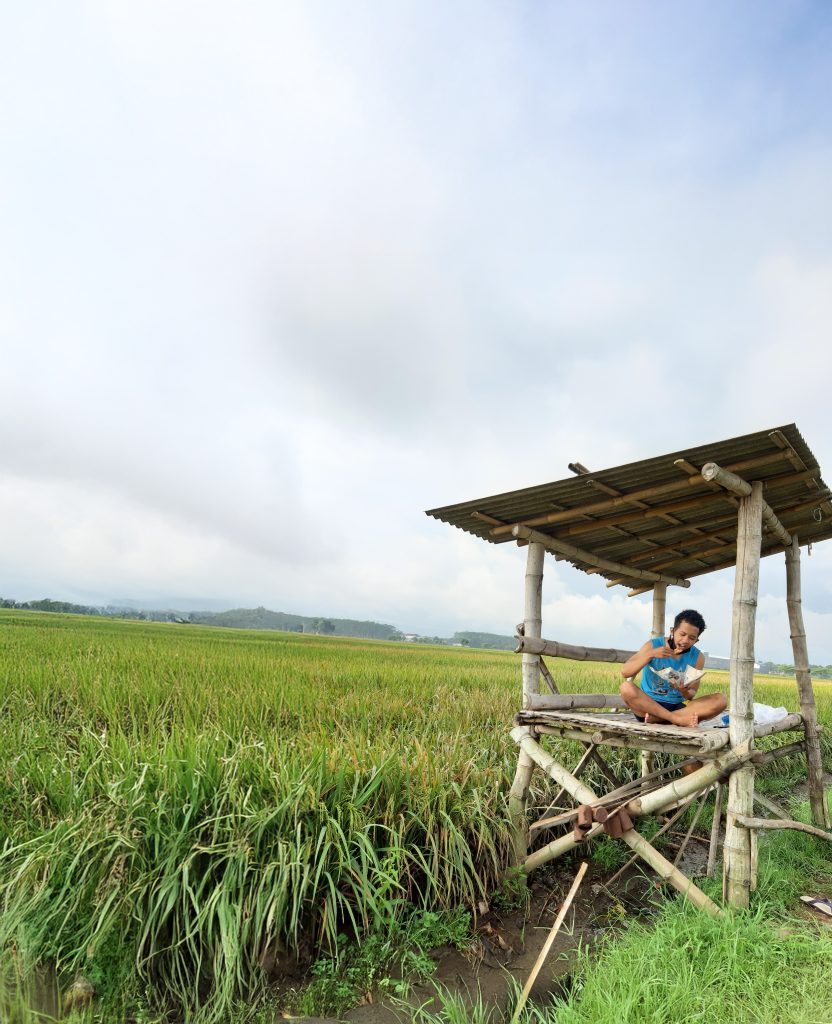
Photo: Dimas Mitsal / Shutterstock
WHY THIS MATTERS BEYOND INDONESIA
For readers across Southeast Asia and beyond, Indonesia’s experience offers a lesson: nutrition literacy is not just a technical intervention; it is a social process.
Programmes that rely only on policy risk become checklists. Programmes that rely only on passion risk burning out. Sustainable change happens when schools are inspired, and governments are engaged — when local voices are amplified within supportive systems.
The metaphor of baking a cake may sound simple, but it captures a profound truth. Too much heat from one side burns; too little leaves the centre uncooked. Balance matters.
A CALL TO ACTION: RETHINKING HOW WE NOURISH MINDS
Nutrition literacy is ultimately about dignity. It is about giving young people the tools to navigate a complex food world with confidence and care. It is about supporting schools not as sites of compliance, but as communities of learning. It is about governments enabling, not suffocating, innovation.
Indonesia’s journey, with initiatives like NGTS, shows that it is possible to cook change thoughtfully. Slowly. Evenly. With intention.
For educators, policymakers, practitioners, and communities across Southeast Asia, the message is clear: when we light the fire from both the top and the bottom, we give nutrition literacy the chance not just to survive, but to rise. ∞
DR JUDHIASTUTY FEBRUHARTANTY
Dr Judhiastuty Februhartanty holds a Doctorate in Nutrition from the Faculty of Medicine, Universitas Indonesia. She is the Nutrition Goes to School (NGTS) Program Coordinator and Affiliated Scientist at the Southeast Asian Ministers of Education Regional Centre for Food and Nutrition (SEAMEO RECFON) and Head of Community Nutrition for the Master in Nutrition Study Program at the Faculty of Medicine, Universitas Indonesia.
Her research focuses on behavioural nutrition, including infant and young child feeding, school-based nutrition programmes for adolescents, and the socio-cultural aspects of eating behaviours, with recent work on food environments and sustainable consumption.

2026 | ISSUE 15
THE FIGHT FOR (GOOD) FOOD
- Reference 1: Council of the European Union, General Secretariat. “From Screens to Fields: How Digitalisation Is Transforming Agriculture.” Consilium, 2025, https://www.consilium.europa.eu/media/31jkkbxi/2024_971- art-agriculture-02.pdf.
- Fabregas, Raissa, and Michael Kremer. “Harnessing the Benefits of Digital Agriculture for Smallholder Farmers in East Africa.” VoxEU / CEPR, 2024, https://cepr.org/voxeu/columns/harnessing-benefits- digital-agriculture-smallholder-farmers-east-africa.
- Food and Agriculture Organization of the United Nations. The State of Food Security and Nutrition in the World, 2025, https:// openknowledge.fao.org/items/4b1f7d26-267d-4a81-aed4- 4f9de4d93f85.