Climate change is no longer a distant threat to food systems. It is already reshaping where, when, and how food is grown, and how much can be produced. Rising temperatures, shifting rainfall patterns, and more frequent extreme events like droughts and floods are disrupting crop yields, increasing price volatility, jeopardising supply chains, and threatening livelihoods 1. At the same time, agriculture itself is a major source of greenhouse gas emissions, contributing to the very climate risks that undermine food security. This creates a dangerous feedback loop: to feed a growing population, we need to intensify agriculture, which, in turn, accelerates environmental degradation and climate change.
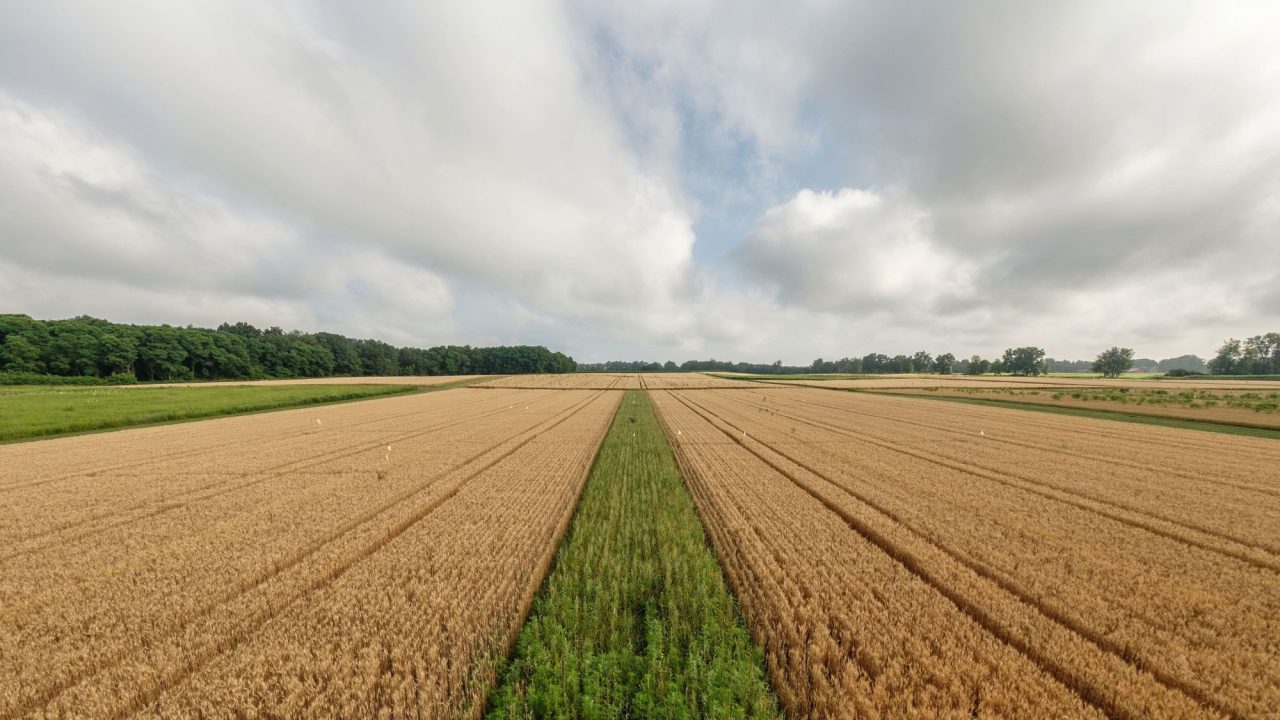
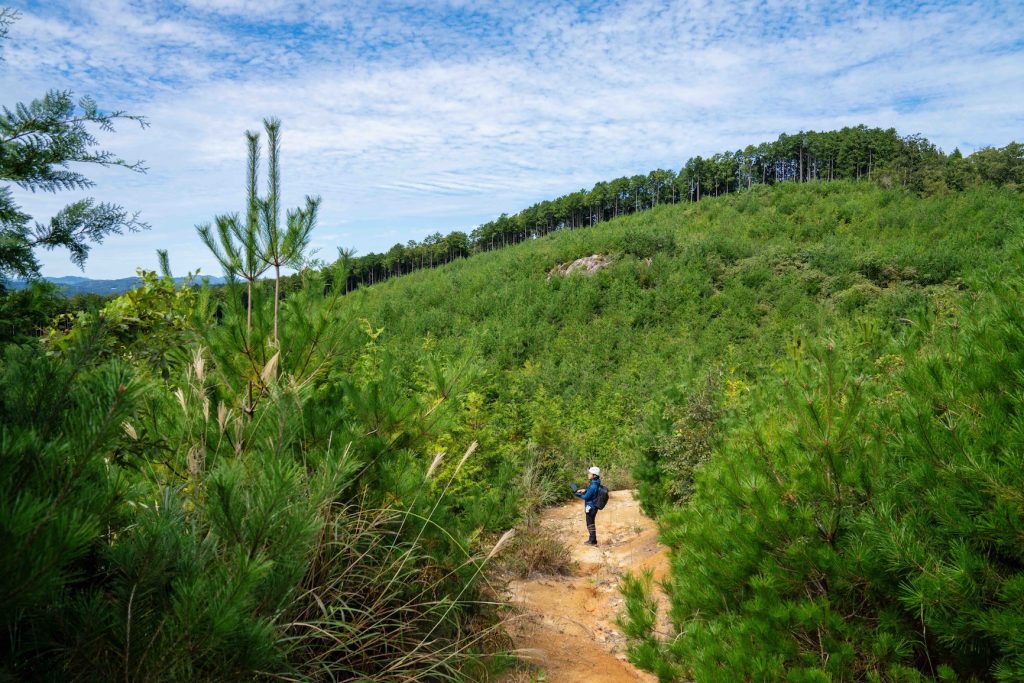
Perennial bioenergy crops in agricultural fields
Perennial bioenergy crops, such as prairie grasses, contribute to rebuilding soil carbon stocks and are used within farming systems as part of broader land management practices.
Source: Michigan State University
Addressing food security, therefore, requires a systems perspective — one that recognises the deep interconnections among food, water, energy, carbon, land, socioeconomics, and climate. Recent climate research, including studies on bioenergy expansion and land-use changes, highlights the need for next-generation, integrated approaches that can guide the design of food systems that are productive, climate-resilient, and environmentally sustainable.
MORE FOOD, MORE PRESSURE?
THE HIDDEN COSTS OF INTENSIFICATION
Feeding a growing global population requires more crop production. In many regions, especially arid and semi-arid ones, this involves expanding irrigation and fertiliser use to boost yields. Although these practices can improve food output in the short term, they could also introduce hidden, long-lasting pressures on the very resources that agriculture depends on.
Expanded irrigation places heavy demands on freshwater resources, intensifying competition of water use between agriculture, industry, and ecosystems. At the same time, fertilisers can leach into groundwater and run off into rivers and coastal waters, degrading water quality, threatening drinking water supplies, and damaging fisheries and marine ecosystems. What begins as an effort to increase food production can, paradoxically, undermine food security by degrading the very water and ecosystem services on which agriculture depends. In many regions, farmers are increasingly forced into difficult trade-offs: producing more food today at the expense of water security, ecosystem health, and long-term agricultural resilience tomorrow.
Climate change further amplifies these pressures. Rising temperatures increase crop water demand, deepening reliance on irrigation, while shifting rainfall patterns and more frequent extreme events make water availability more unpredictable.
What begins as an effort to increase food production can, paradoxically, undermine food security by degrading the very water and ecosystem services on which agriculture depends.
These challenges are especially acute in Asia, where land and water resources are already under intense pressure. The region must feed large and growing populations while facing escalating climate risks, including heatwaves, droughts, floods, and sea- level rise. Agriculture across much of Asia is highly water-dependent, making it particularly vulnerable to climate variability. Increasingly unpredictable and abnormal rainfall under climate change makes it more difficult for local farmers to plan planting, irrigation, and harvesting. Communities with fewer resources and limited adaptive capacity are therefore more likely to bear disproportionate impacts, further widening existing inequalities in water access, food security, and livelihoods.
Land-based climate solutions must be evaluated across multiple dimensions — climate, land, food, water, energy, and carbon systems — and across both local and remote impacts, rather than in isolation.
NOT ALL GREEN SOLUTIONS ARE RISK-FREE
As climate change intensifies, the search for mitigation solutions becomes ever more urgent. Many proposed strategies rely heavily on land2 3. Bioenergy — energy derived from crop grains, stems, and leaves — has gained attention as an alternative to fossil fuels. Bioenergy crops can absorb carbon dioxide as they grow, and when combined with carbon capture technologies, they are often promoted as a pathway to “negative emissions”. 45 Perennial bioenergy crops, in particular, have attracted interest because they do not directly compete with food crops and are often assumed to pose lower risks to food security.
However, land-based climate solutions are not automatically compatible with food and water security. 67 My previous research shows that large-scale expansion of perennial bioenergy crops can create significant risks across land, water, food, and climate systems. In our 2022 study published in Science Advances, we used advanced Earth system models — tools that simulate how climate, ocean, land, water, carbon, energy, ecosystems, and agriculture interact under different future land-use pathways. We found that converting land to bioenergy crops can release large amounts of carbon during land conversion, increase irrigation demand, and exacerbate water-quality-related stress, especially in regions that are already water-limited.
Our follow-up studies further revealed that these impacts are not confined to where bioenergy is grown. Large-scale bioenergy expansion can alter atmospheric and ocean circulation, affecting rainfall and temperature patterns far beyond the regions directly involved. At the same time, significant uncertainties in future bioenergy crop yields, energy conversion efficiency, and carbon capture effectiveness further complicate the assessment of their true carbon sequestration benefits. Together, these findings underscore a critical lesson: land-based climate solutions must be evaluated across multiple dimensions — climate, land, food, water, energy, and carbon systems — and across both local and remote impacts, rather than in isolation.
Other land-based mitigation strategies, such as forest conservation, reforestation, and afforestation, require the same level of careful assessment. While forests can deliver important climate benefits, their success depends on being placed on climatically suitable land. In our 2024 study published in Proceedings of the National Academy of Sciences, we found that some areas targeted for reforestation or afforestation may become increasingly drought- prone by mid-century, making them unsuitable for sustained forest growth. Poorly sited forestation efforts risk maladaptive investments and can exacerbate water scarcity, with downstream implications for regional food systems and water security.
SAFEGUARD FOOD SECURITY:
AN IMPERATIVE FOR TRANSDISCIPLINARY APPROACHES
Together, these examples illustrate a broader point: food security sits at the intersection of climate mitigation, land use, water availability, ecosystem health, and human decision-making. Addressing these trade-offs cannot rely on single-sector solutions or simple accounting of emissions or crop yields. Instead, safeguarding food security under climate change requires integrated, next- generation approaches that connect climate, land, water, energy, and carbon dynamics with ecosystem processes and socioeconomic systems. Integrated human-Earth system modelling, enhanced with AI, provides a framework to evaluate land-based climate solutions holistically, identify unintended risks early, and design strategies that protect food and water security while delivering credible climate benefits.
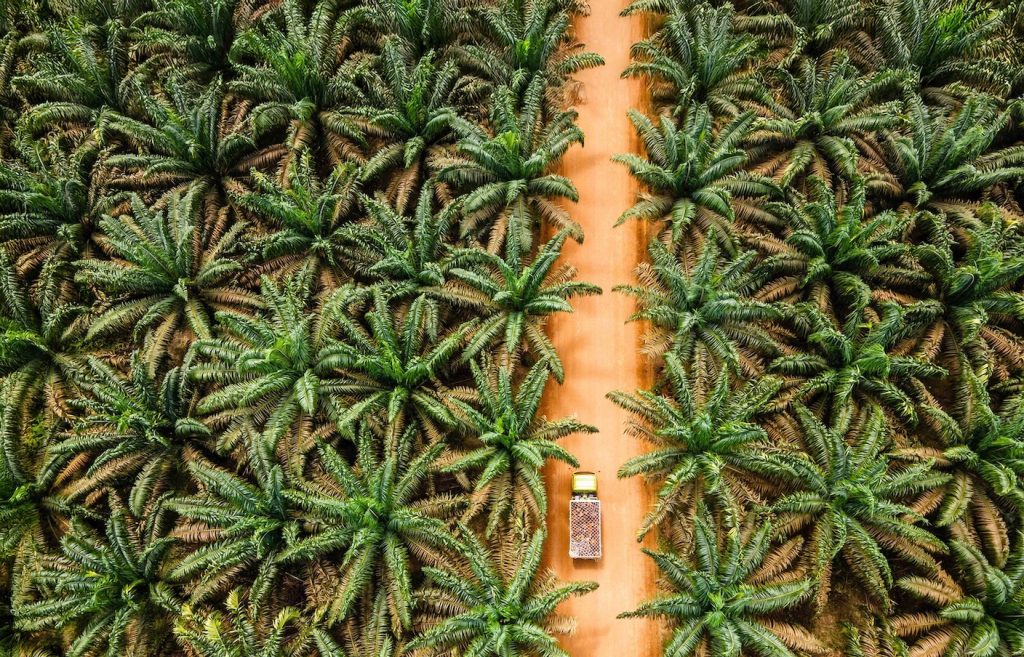
Palm oil and changing land use
In Indonesia, palm oil is both a major food crop and a source of biofuel, with government support increasing demand for production and land. As plantations expand, forests and peatlands have been cleared, creating tensions between food production, energy use, and environmental sustainability.
Photo: Anks Rachman / iStock
Food security sits at the intersection of climate mitigation, land use, water availability, ecosystem health, and human decision-making.
From the human system side, integrated assessment models are essential tools for exploring climate mitigation pathways. 8 Integrated assessment models explicitly represent interactions among socioeconomic development, energy systems, land use, water use, and climate, and they operate by testing assumptions about future policies, technologies, and economic and demographic trends. 91011 Under these assumptions and constraints, integrated assessment models examine which combinations of solutions could meet climate targets and quantify their timing, scale, and sequencing. In this way, integrated assessment models do not prescribe a single “optimal” future, but instead help identify plausible pathways — outlining what actions could be taken, where they might occur, and when they would need to be implemented across the food-water-energy-carbon- land-socioeconomic nexus.
Earth system models complement integrated assessment models by simulating the physical and biological responses of the Earth system, including interactions among climate, land, oceans, ecosystems, and agriculture. 12131415 They allow scientists to evaluate how proposed land-based climate solutions affect food production, water availability, and climate feedback simultaneously, revealing not only intended benefits but also potential risks and trade-offs. When coupled with integrated assessment models, these models can help policymakers evaluate questions such as:
• How might expanding irrigation and fertiliser use affect water availability and stress in a changing climate, and how can we optimise their use?
• What are the long-term consequences of land-use changes, such as converting forests to croplands, and how can we manage these impacts to safeguard food production and ecosystem health?
• How can we increase food production while protecting water availability and quality, and maintaining healthy ecosystems?
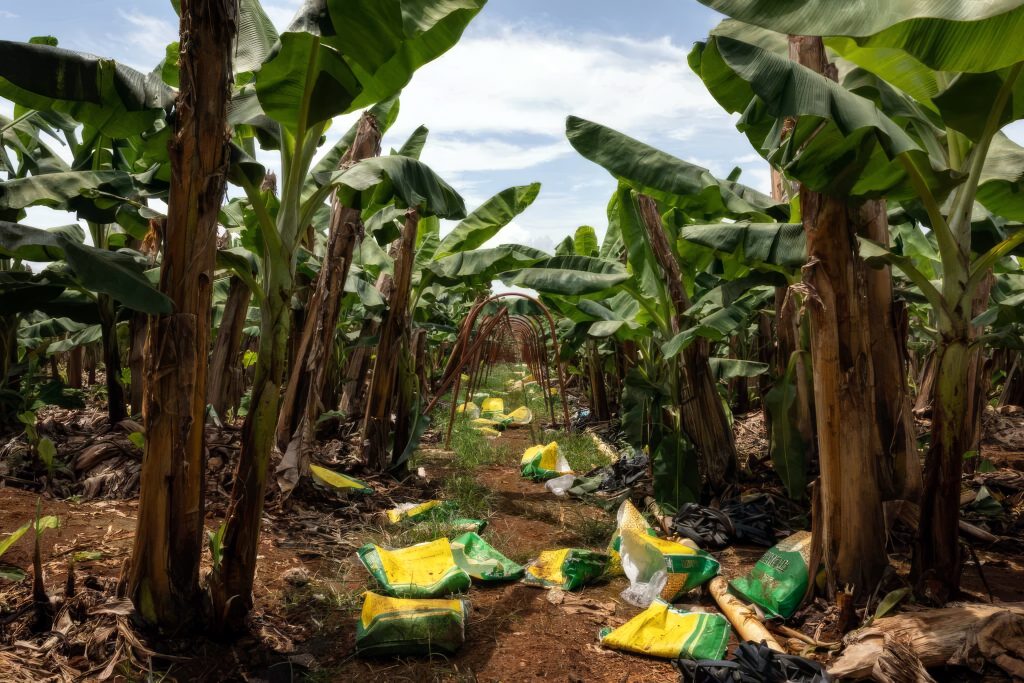
Fruits of expansion
The new Laos–China railway has enabled faster fruit exports from Laos to China, attracting investment in large-scale banana and durian plantations. This growth, driven by regional demand, has contributed to deforestation. In 2023 alone, Laos lost more than 136,500 hectares of primary forest — around 3.5 times the size of Singapore.
Source: Rainforest Investigation Network
Integrated human-Earth system modelling provides the structure to connect human decisions with Earth system responses.
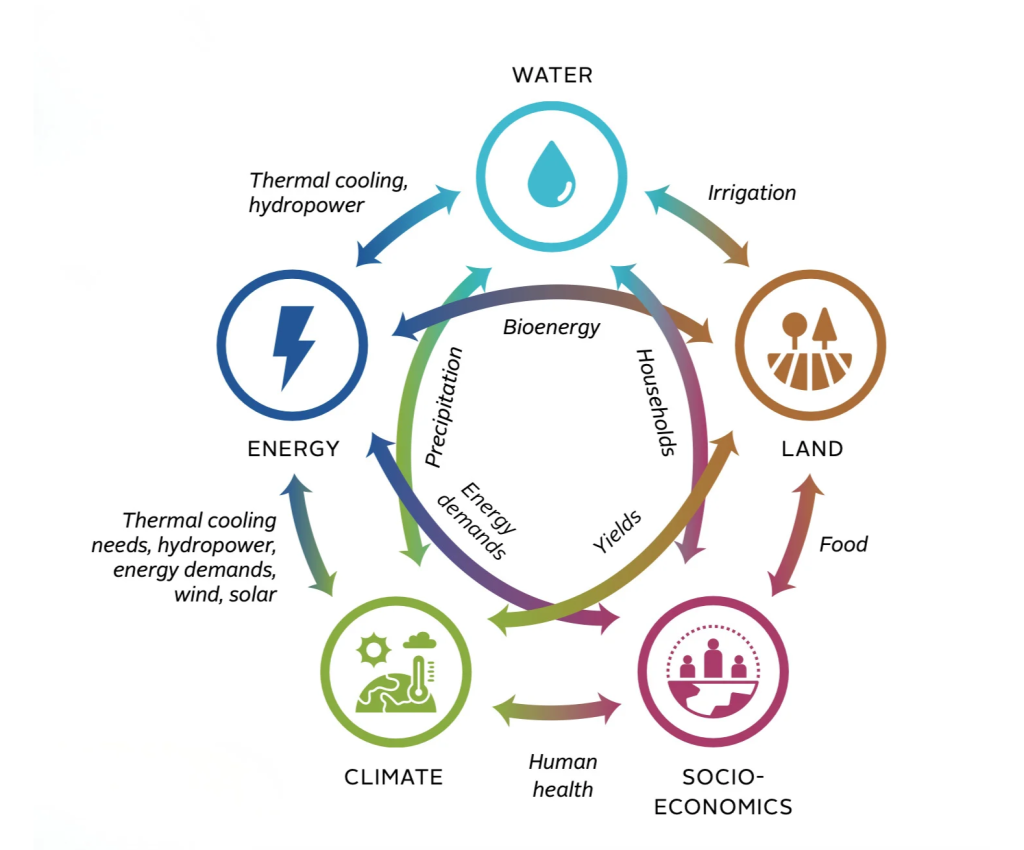
Complex interactions between land, water, energy, climate, and socio- economic systems shape food production and environmental outcomes.
Source: Pacific Northwest National Laboratory
These questions lie at the heart of nutrition and food security and highlight the need for truly coordinated, interdisciplinary approaches. Integrated human-Earth system modelling provides the structure to connect human decisions with Earth system responses. With recent advances in AI, we can further enhance this framework by improving both model performance and data foundations. More specifically, physics-informed AI methods can reduce the computational cost of Earth system simulations while preserving physical realism, enabling faster and more actionable insights. At the same time, reliable, high-resolution data on land-use and land-cover changes are critical for identifying and determining what solutions to deploy, where, and when. Such data are often fragmented and inconsistent across regions.
AI-based data compilation and harmonisation techniques can help integrate diverse datasets into coherent, regionally consistent inputs, supporting downstream applications in models and enabling more sustainable and equitable land-use decision- making.
Because these solutions are intended to inform real-world policy and planning, co-production with stakeholders beyond academia — including policymakers, practitioners, and local communities — is essential to ensure national relevance and societal benefit. Addressing knowledge and communication gaps between scientific outputs and on-the-ground decision-making is particularly important so that local farmers can effectively access, understand, and use information derived from advanced technologies. Ensuring that findings are clearly communicated and accessible is therefore a critical component of impact. Taken together, transdisciplinary, AI-enabled integrated human-Earth system modelling approaches are imperative for safeguarding food security in a changing climate.
Ensuring that these projects do not compromise food security or water resources is essential: not only for environmental integrity, but also for regional stability and trust in carbon markets.
Footprint beyond its borders
Singapore is increasingly involved in forestry and restoration projects across Southeast Asia. Initiatives include WWF- Singapore’s Canopy facility, supporting 12,000 hectares of restoration, and the NUS-led Carbon Integrity SG project (USD 15 million), focused on developing high-integrity carbon credits.
Photo: tdub303 / iStock
WHY SINGAPORE HAS A STAKE
Although Singapore produces little of its own food, it is deeply connected to regional food, water, carbon, land, and climate systems. As a major food importer and a growing hub for green climate- finance and carbon markets, Singapore’s decisions and investments influence land-use practices across Southeast Asia, from agriculture to forestry and plantation management.
Singapore’s ambition to achieve net-zero emissions by 2050 includes purchasing high-quality carbon credits from the region. Many of these credits are tied to land-based projects, such as forest conservation and reforestation. Ensuring that these projects do not compromise food security or water resources is essential: not only for environmental integrity, but also for regional stability and trust in carbon markets.
Next-generation climate research can help Singapore identify solutions that are not only effective but also equitable, sustainable, and resilient. By using science- based assessment frameworks, Singapore can help set standards for sustainable land use that protect both people and ecosystems while promoting climate justice across the region.
A CALL FOR COORDINATED ACTION ACROSS SCIENCE, POLICY, AND LOCAL COMMUNITIES
Food security under climate change is not just about producing more calories. It is about ensuring access to nutritious food without degrading the natural systems that sustain life. Climate research shows that choices about land use — whether for food, energy, or carbon mitigation — have far-reaching consequences for food, energy, water, ecosystems, and human well-being.
The lesson from bioenergy and land-use studies is clear: there are no simple solutions. Climate mitigation strategies must be evaluated through a climate-land-food-energy-water-carbon- socioeconomic lens, grounded in robust science and informed by local contexts.
For Asia, and for green, climate-finance, and carbon hubs like Singapore, the opportunity also lies in leadership — bringing together science, policy, finance, and communities to design food systems that are resilient, equitable, just, and sustainable. By integrating traditional knowledge with cutting- edge, next-generation climate and AI research, we can move beyond trade-offs toward solutions that nourish both people and the planet in the era of AI and big data. ∞
The low-emission rice challenge
Rice production in Southeast Asia is central to food security, but also a major source of methane emissions. For many farmers, shifting to lower-emission practices remains difficult, as they face higher costs and uncertain returns.
Photo: Preeyaporn Kaewsaard / iStock
ASST PROF YANYAN CHENG
Asst Prof Yanyan Cheng is an Assistant Professor at the Asian School of the Environment, Nanyang Technological University, Singapore. Her interdisciplinary research integrates socioeconomic and policy insights with climate and environmental science to develop cost- effective, climate-resilient, sustainability-enhancing, and nature-positive land-based climate solutions tailored to diverse local and regional contexts.
Her Climate and Hydrology for Earth and Ecosystem Resilience and Sustainability (CHEERS) group combines Earth system models, hydrological models, ecosystem demography models, integrated assessment models, field observations, remote sensing datasets, and modern optimisation and ML/AI techniques to evaluate ecosystem services, resilience, robustness, and risks associated with diverse nature-based climate solutions.
2026 | ISSUE 15
THE FIGHT FOR (GOOD) FOOD
- Calvin, Katherine, et al. Climate Change 2023: Synthesis Report. Contribution of Working Groups I, II and III to the Sixth Assessment Report of the Intergovernmental Panel on Climate Change. Edited by H. Lee and J. Romero, IPCC, 2023. https://www.ipcc.ch/report/ar6/syr/downloads/report/IPCC_AR6_SYR_FullVolume.pdf
- Griscom, BW, et al. “Natural Climate Solutions.” Proceedings of the National Academy of Sciences of the United States of America, vol 114, no 44, 2017, pp 11645–11650. https://doi.org/10.1073/ pnas.1710465114.
- Harper, Anna B, et al. “Land-Use Emissions Play a Critical Role in Land-Based Mitigation for Paris Climate Targets.” Nature Communications, vol 9, no 1, 2018, p 2938. https://doi.org/10.1038/ s41467-018-05340-z.
- Fuss, Sabine, et al. “Betting on Negative Emissions.” Nature Climate Change, vol 4, 2014, pp 850–853. https://doi.org/10.1038/ nclimate2392.
- Field, John L, et al. “Robust Paths to Net Greenhouse Gas Mitigation and Negative Emissions via Advanced Biofuels.” Proceedings of the National Academy of Sciences of the United States of America, vol 117, no 36, 2020, pp 21968–21977.
- Hejazi, Mohamad I, et al. “21st Century United States Emissions Mitigation Could Increase Water Stress More Than the Climate Change It Is Mitigating.” Proceedings of the National Academy of Sciences of the United States of America, vol 112, no 34, 2015, pp 10635–10640. https://doi.org/10.1073/pnas.1421675112.
- Stokstad, Erik. “Bioenergy Not a Climate Cure-All, Panel Warns.” Science, vol 365, no 6453, 2019, pp 527–528. https://doi.org/10.1126/ science.365.6453.527.
- Calvin, Katherine, et al. “GCAM v5.1: Representing the Linkages Between Energy, Water, Land, Climate, and Economic Systems.” Geoscientific Model Development, vol 12, 2019, pp 677–698. https:// doi.org/10.5194/gmd-12-677-2019.
- O’Neill, Brian, et al. “The Scenario Model Intercomparison Project (ScenarioMIP) for CMIP6.” Geoscientific Model Development, vol 9, 2016, pp 3461–3482. https://doi.org/10.5194/gmd-9-3461-2016.
- O’Neill, Brian C, et al. “The Roads Ahead: Narratives for Shared Socioeconomic Pathways Describing World Futures in the 21st Century.” Global Environmental Change, vol 42, 2017, pp 169–180. https://doi.org/10.1016/j.gloenvcha.2015.01.004.
- Riahi, Keywan, et al. “The Shared Socioeconomic Pathways and Their Energy, Land Use, and Greenhouse Gas Emissions Implications: An Overview.” Global Environmental Change, vol 42, 2017, pp 153–168. https://doi.org/10.1016/j.gloenvcha.2016.05.009.
- Danabasoglu, Gokhan, et al. “The Community Earth System Model Version 2 (CESM2).” Journal of Advances in Modeling Earth Systems, vol 12, 2020, pp 1–35. https://doi.org/10.1029/2019MS001916.
- Golaz, Jean-Christophe, et al. “The DOE E3SM Model Version 2: Overview of the Physical Model and Initial Model Evaluation.” Journal of Advances in Modeling Earth Systems, 2022, pp 1–51. https://doi. org/10.1029/2022MS003156.
- Lawrence, David, et al. “The Community Land Model Version 5: Description of New Features, Benchmarking, and Impact of Forcing Uncertainty.” Journal of Advances in Modeling Earth Systems, vol 11, 2019, pp 4245–4287. https://doi.org/10.1029/2018MS001583.
- Leung, L Ruby, et al. “An Introduction to the E3SM Special Collection: Goals, Science Drivers, Development, and Analysis.” Journal of Advances in Modeling Earth Systems, 2020. https://doi. org/10.1029/2019MS001821.